The annual WRTC fundraising marathon concluded Oct. 23.
On behalf of the staff and management, we thank all of our generous listeners who pledged to support the station.
Those who pledged will receive a payment form in the mail. Just follow the simple instructions and return it to: WRTC Marathon, 300 Summit St., Hartford, CT 06106.
“Thank You” premiums will be mailed out in the near future.
As the non-commercial radio station of Trinity College, we offer a diverse schedule of 60-plus programs on a weekly basis.
Much of our financial assistance comes from our loyal listeners and we rely on your backing to keep us on the air doing what we do best.
For more information, or to make a pledge by phone, contact the station at 860-297-2450. Donations are also welcome via WRTC’s secure site here.
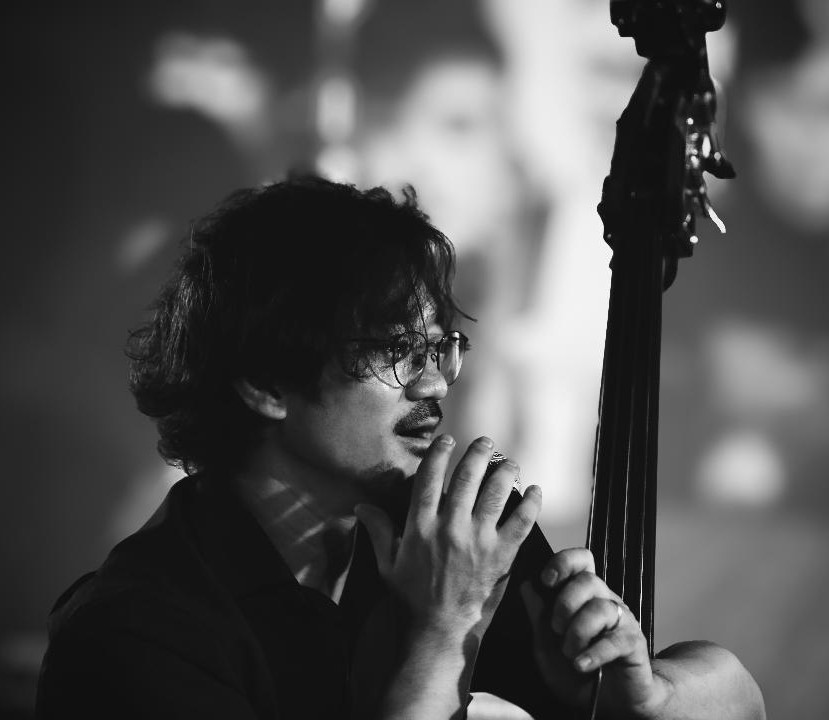
On the Sept. 27 edition of Friday Class, Prof. Lay closed the observance of Suicide Prevention Month with a special interview with jazz bassist, producer and professor Ray Soul.
In this deeply personal and wide-ranging discussion, Soul reflects on the ways music can become a language when words fail us. He speaks openly about how his music has helped him navigate loss, silence, grief and the difficult spaces where communication seems impossible.
Soul lost his mother to suicide.
Sometimes, Soul says, there are no words adequate to express what we are experiencing. Music can offer another way to speak, listen, remember and connect.
Throughout his career, Soul — who is an assistant professor in the Professional Music Department at Berklee College of Music in Boston — has collaborated with an extraordinary range of artists, including: Jason Moran, Marta Gómez, Scott Robinson, Art Hirahara, and Takuya Kuroda.
He also participated in the Latin Grammy-nominated album Yeah Won, notable as the first Korean album recognized in the Música Popular Brasileira category.
The interview also explores Soul’s creative projects, including Seu Aprendiz and his newest project, The Prison of Language, which examines the possibilities and limitations of language itself.
For Soul, however, it goes beyond a discussion of his career.
It considers what happens when music becomes a means of confronting the loss of a loved one to suicide: an experience that is difficult, or even impossible, to articulate. How do we communicate grief? What do we do with silence? And what can music say when language reaches its limits?
As we close Suicide Prevention Month, this feature offers an opportunity to think about connection, expression, listening and the many ways people communicate what they cannot always say aloud.
The 988 Suicide & Crisis Lifeline provides 24/7, free and confidential support for people in distress, prevention and crisis resources for individuals or their loved ones.
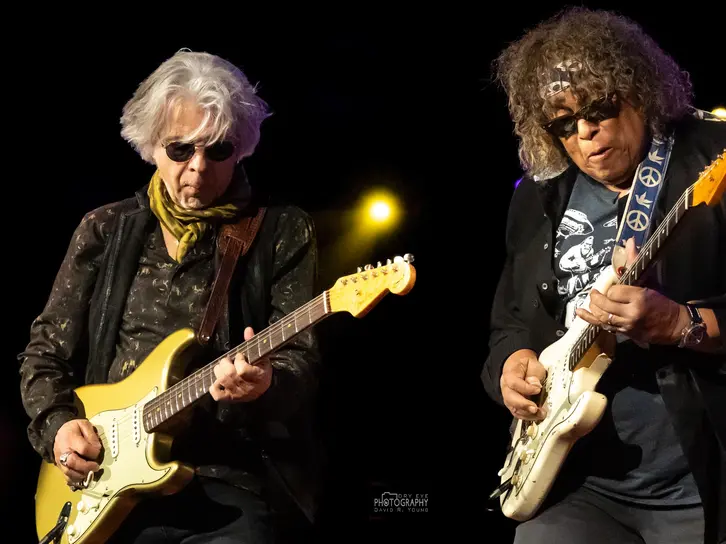
An interview with and the music of guitarist Jon Butcher was featured on the Sept. 19 edition of Greasy Tracks.
If you missed it, here’s the archive and the playlist is here.
Heavily influenced by Jimi Hendrix and Jeff Beck, Butcher is known for his energetic playing, tracing his roots to the Boston rock scene where he honed his skills in the 1970s, before gaining international exposure as the focal point of a power trio, The Jon Butcher Axis.
The band released its self-titled debut album in 1983 and since that time put out numerous studio and live sides. The group has had a handful of reunion periods, following their initial break-up in 1991, but after 47 years, they will officially call time as a band on Nov. 21 at The Center for Arts in Natick, Mass.
Two For The Show: Johnny A and Jon Butcher. (David R. Young photo).
Throughout his career, Butcher has worked across rock, blues and contemporary music, while maintaining his identity as a guitarist and performer. He combines a tasteful, blues-based phrasing and rock power with melodic songwriting.
In 1994, he formed Barefoot Servants which signed to Epic Records. The band included Leland Sklar (bass), Ben Schultz (guitar) and Ray Brinker (drums). The released two albums, a self-titled debut (1994) and Barefoot Servants 2 (1995).
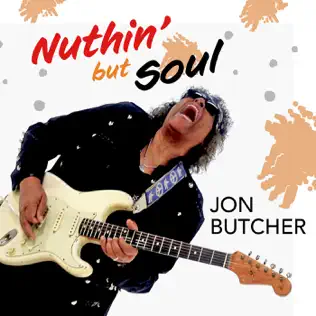
Butcher went solo after the 1991 breakup of The Jon Butcher Axis. His most recent release, Nuthin’ but Soul, came out last year.
He has contributed material and scored music for numerous television programs, film productions and video games. His work has appeared on such series as Shameless, Ugly Betty, Star Trek: Next Generation, The Sopranos, Nurse Jackie, Law & Order and The X-Files, to name but a few.
Singer/songwriter Della (Natalie Schroeder) was an in-studio guest on the Aug. 24 edition of The Devo Rock Show.
If you missed it, here’s the archive and the playlist is here.
In addition to Della performing a few of her tracks, Devo played her latest single, “Take A Picture” as well as music from her debut EP, Playing Pretend.
Della started making music at age 15 and has placed in the top seven teen songwriters in the International Songwriting Competition. Her music incorporates many different styles and shows a maturity that defies her age.
She’s currently a student at NYU and is working on her first full-length album.
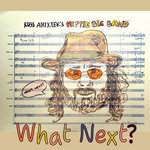
The Aug. 22 edition of Greasy Tracks features an interview with Russ Anixter who discussed What Next?, the just-released album by The Hippie Big Band, his 11-piece ensemble.
f you missed it, here’s the archive, while a playlist is here.
Recorded during a two-day session this past February at The Bunker Studios in Brooklyn, NY., Anixter and his cohorts’ nine-track effort serves as an impressive follow-up to their 2025 debut, What Is?
The digital version of the new album includes a bonus cut — Black Sabbath’s “War Pigs.”
The project continues Anixter’s distinctive blend of big-band jazz, rock, funk and blues with an emphasis on heavy improvisation.
As with What Is?, Anixter transforms familiar material — this time from The Beatles, Curtis Mayfield, Grateful Dead, Eugene McDaniels and Miles Davis — into expansive arrangements marked by colorful horn writing and adventurous solos.
On Sept. 16, ace guitarist Oz Noy and his rhythm section will be joined by members of the Hippie Big Band (brass, saxes and vibes) at the Bitter End in New York City. Showtime is 9:30 p.m.
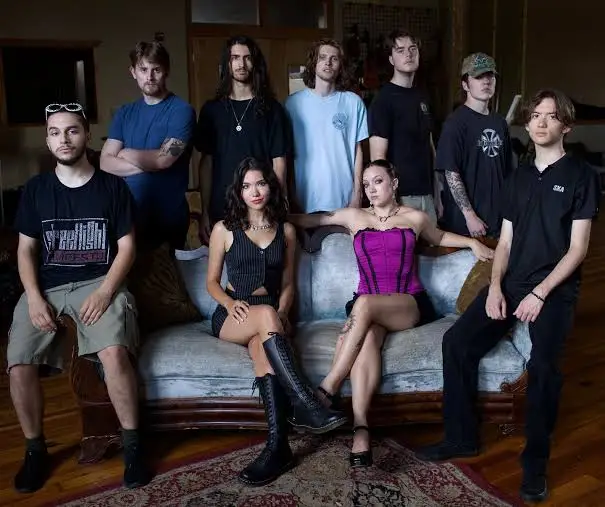
The July 19 edition of Strictly Roots featured an in-studio interview with members of the New Haven-based punk/reggae band Solgyres.
Formed in 2020, the now 10-piece band released their self-titled debut album in 2024. The 14-track effort included an appearance by G. Love of G. Love & Special Sauce who added vocals to “Immortal.”
On July 24, Solgyres will appear with the Quasi Kings at Hop Culture Brewery in Colchester. On July 25, they’ll play the 420 Community Fest in Holy Ghost Park in Shelton. Each concert will feature DJ Patrick the Sunday Selector spinning tunes in between bands.
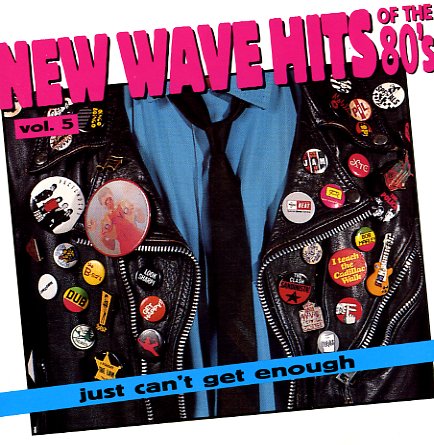
Remember when the “M” in MTV stood for “music” and not “morons?”
A special edition of the Soul Express with Dean Farrell on June 3 featured nothing but 1980s New Wave jams.
If you missed it, here’s the archive, while a playlist is here.
When it comes to these tunes, Dean admittedly just can’t get enough. So put on your narrow tie, dye your hair a luminous color, sharpen your caustic wit and prepare to Safety Dance!
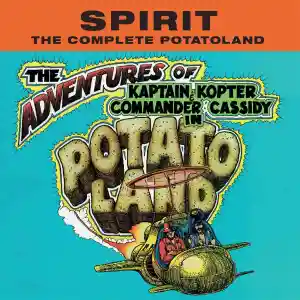
The May 30 edition of Greasy Tracks featured the second of a two-part spotlight on Spirit.
If you missed it, here’s the archive, while a playlist is here.
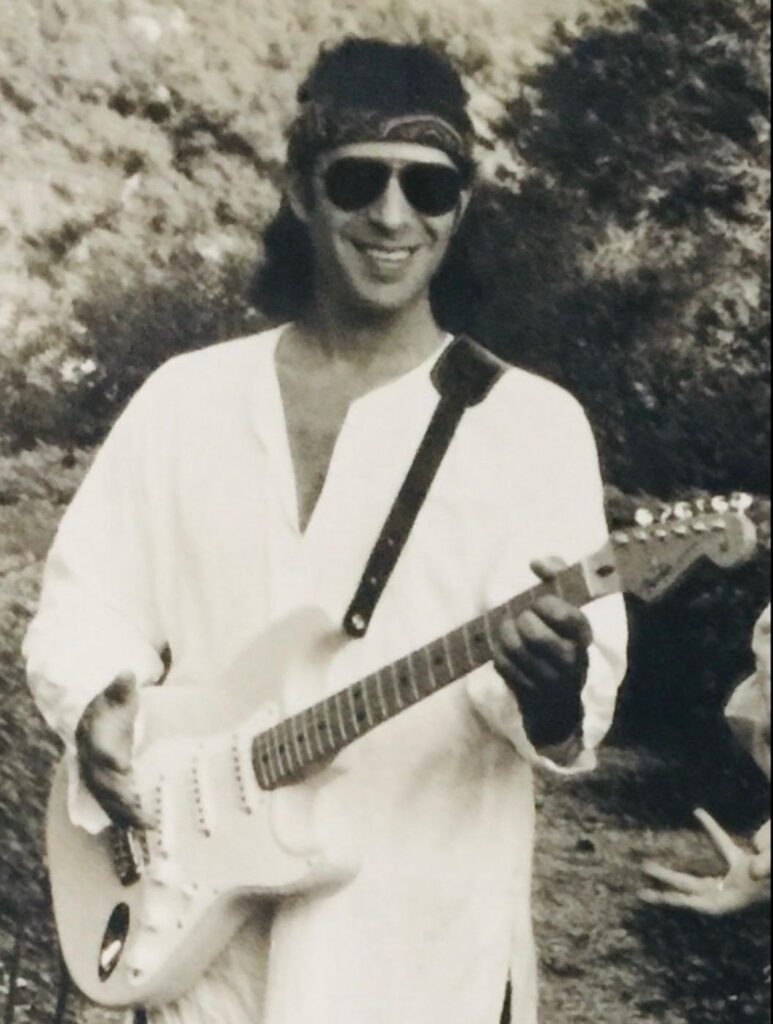
Randy California in a 1991 promo photo (Bob Birk photo)
There was an interview with Mick Skidmore who is trustee of the Randy Craig Wolfe Trust and has overseen the release of numerous Spirit- and Randy California-related albums, in many cases remastering archival nuggets buried in the Spirit audio vault.
To check out the first part of the special, click here.
Wolfe, best known as Randy California, one of the founders of Spirit, was an innovative guitarist who had earlier played with Jimi Hendrix in his band, Jimmy James and the Blue Flames. It was Hendrix who gave him the name “California” to differentiate him from bassist Randy Palmer whom he nicknamed “Randy Texas.”
He formed the group with bassist Mark Andes and vocalist/keyboardist Jay Ferguson in 1967. The pair had played with him in the Red Roosters. They brought in Wolfe’s stepfather, drummer Ed Cassidy and keyboardist John Locke who were also heavily into jazz, compared to Andes and Ferguson who were, according to Andes, “valley boys who were into surf and rock music.”
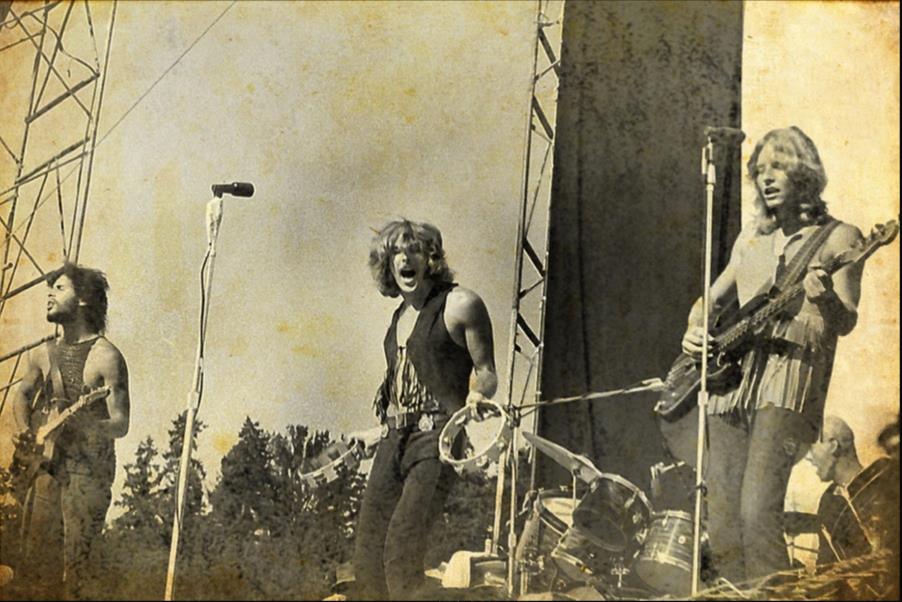
Spirit in concert: (from left) Randy California, Jay Ferguson and Mark Andes with Ed Cassidy on drums.
Best known for their 1968 single “I Got A Line On You” which went to No. 25 in the U.S. charts, the band merged rock, jazz and psychedelia — essentially progressive rock before the genre gained popularity in the early 1970s.
Between 1968-70, the band released four albums, including their self-titled debut, The Family That Plays Together, Clear and The Twelve Dreams of Dr. Sardonicus — which would be their only gold album.
The music for the two-part feature will be from the post-Dr. Sardonicus era when Spirit would go through a number of personnel changes as California and Cassidy remained the only holdovers from the original line-up.
We’ll be going deep into the Spirit catalog from the mid-1970s through California’s final studio effort, California Blues in 1996.
There will be an interesting mix of studio material, culled from such albums as Spirit of ’76, Son of America, Sea Dream, The Euro-American Years and Tent of Miracles and live offerings from Two Sides of a Rainbow – Live at the Rainbow, London 1978; Live at the Ash Grove 1967; and Live At Mile Square Park.
There would be a handful of half-hearted Spirit reunions over the years and the California-Cassidy band would continue to record and tour until California’s tragic death at the age of 45 in 1997 when he drowned while saving his son, Quinn, from a riptide off of Molokai, Hawaii.
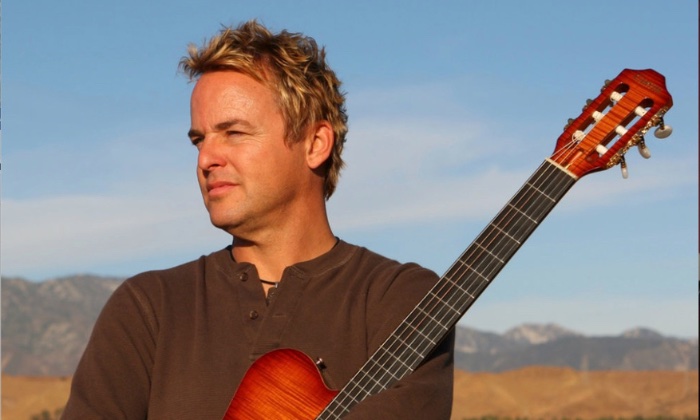
Devo debuted the new single by guitarist Steve Oliver, featuring multi-instrumentalist Peter White, as he guest-hosted Day Break Jazz on May 18.
If you missed it, here’s the archive, while a playlist is here.
He also included an interview he did May 1 with Oliver at the “Smooth Jazz for Scholars” benefit in Milford, Conn. Oliver discussed his forthcoming album, Inner Fire, which comes out June 12. Devo also plans to air tracks from Unified (Shanachie), Oliver’s collaboration with pianist Brian Simpson as well as material from his 2023 release, A New Light (Wide Sky Records).
Heavily influenced by Pat Metheny and Wes Montgomery, Oliver got his start in the late 1990s and has since had multiple No. 1 hits and dozens of Top 10 singles on the Billboard jazz chart.
He’s performed at many jazz festivals around the country and is currently based in California. As a writer, producer and performer he has collaborated with a long list of artists and has had his work featured in feature films and television.